What Is Mold Remediation?
Mold remediation is the documented industry process for returning a contaminated structure to a safe, mold-free condition — and keeping it that way. It's broader than what most homeowners picture when they hear "mold removal." Remediation includes the inspection that finds the problem, the containment that prevents spores from spreading to clean parts of the house, the physical removal of affected materials, the drying that eliminates the moisture source, the rebuild, and the final third-party verification that the work actually worked. Every step follows the IICRC S520 Standard for Professional Mold Remediation — the same protocol your insurance adjuster expects to see in writing before approving a claim.
Why Pensacola Homes Need Mold Remediation
Pensacola's humid subtropical climate makes mold remediation a near-routine event for local homeowners. Average relative humidity stays above 70% most of the year, summer dewpoints push past the upper 70s, and our position on the Gulf Coast exposes every structure to tropical-system rainfall, salt-air corrosion, and the occasional direct hurricane hit. Older neighborhoods like East Hill, North Hill, and Cordova Park have framing and insulation that pre-date modern moisture barriers. Slab homes in Brent, Warrington, and Myrtle Grove see chronic wicking. Crawl-space construction throughout Escambia and Santa Rosa counties traps humid air against floor joists for months at a time. Once mold establishes in any of these conditions, surface cleaning alone never finishes the job — the moisture source is still there, and the colony returns within weeks. That's why remediation, not cleanup, is the correct response.
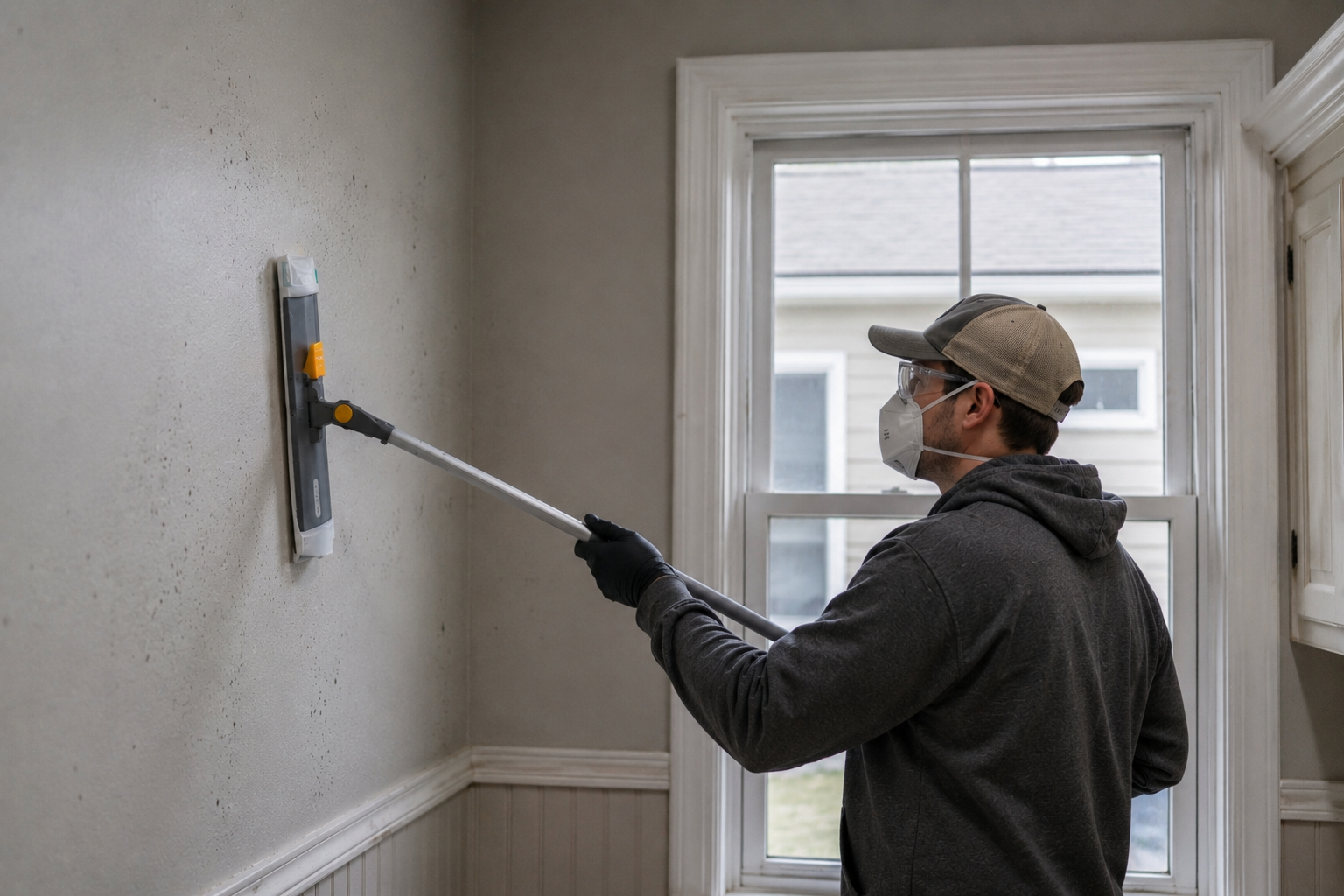
The Remediation Process
Our seven-step process is identical on every job, scaled to the size of the loss:
- Free inspection and scope. A certified technician walks the home with moisture meters and thermal imaging, maps affected areas, identifies the water source, and provides a written scope and estimate before any work starts.
- Containment. 6-mil plastic barriers, zipper doors, and negative-pressure machines isolate the work area so spores can't travel through the rest of the house or the HVAC system.
- Air filtration. HEPA air scrubbers run continuously throughout the project, capturing airborne spores down to 0.3 microns.
- Removal. Contaminated drywall, insulation, carpet, baseboards, and other porous materials are bagged, sealed, and disposed of per Florida regulations. Framing and other structural materials are HEPA-vacuumed and treated with EPA-registered antimicrobials.
- Drying. Commercial dehumidifiers and air movers bring moisture content in framing below 16%.
- Restoration. Insulation, drywall, paint, trim, and flooring are rebuilt to pre-loss condition.
- Post-verification testing. Independent third-party air clearance confirms the indoor environment is back below baseline before we close the job.
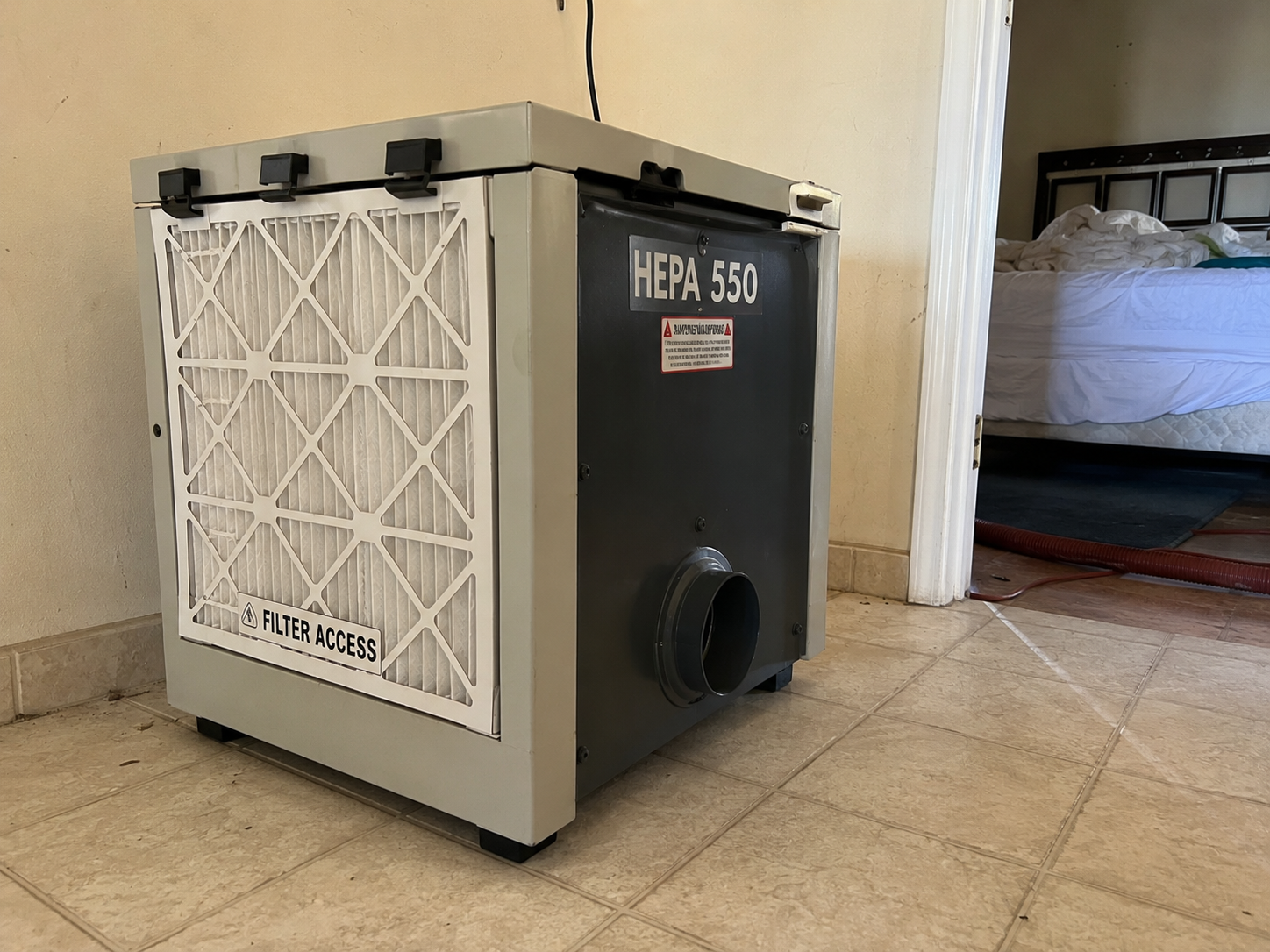
Before remediation begins, we recommend a documented mold inspection and testing — both for insurance purposes and to confirm the species involved. If the underlying cause is active water intrusion, the water damage has to be resolved first, or the mold will return. After a major tropical system, see our hurricane mold cleanup page for post-storm response details.